
Courtyards and changing uses
Look at enclosure, light and the specific use of a space before treating it as a timeless scene.
Published 14 September 2026
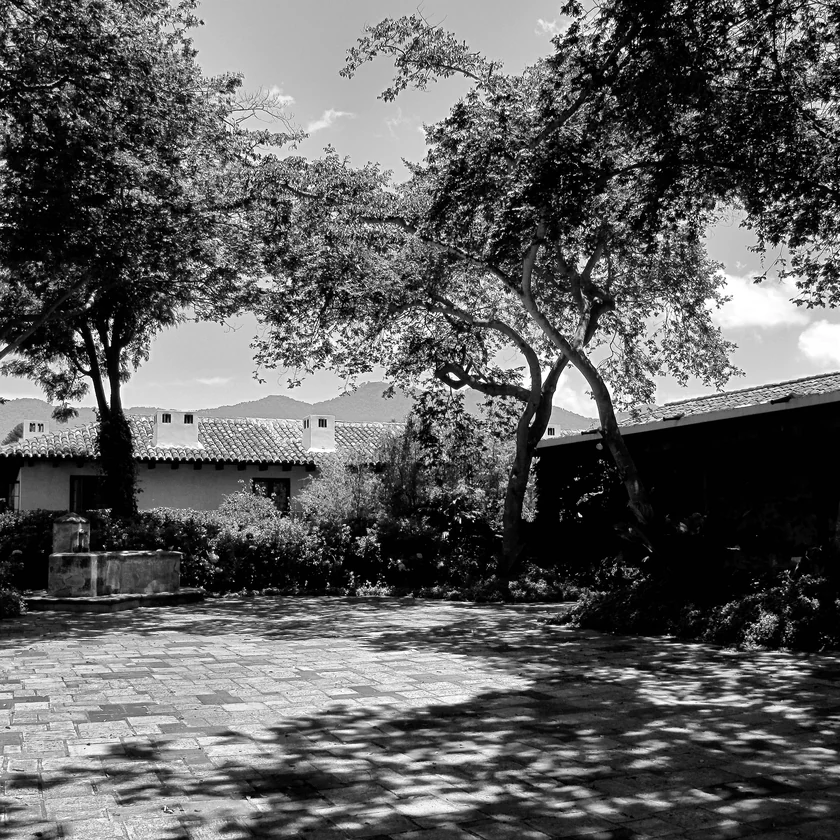

A courtyard can make a large place feel modest. Stand back from the doorway and notice the relationship between ground, trees, walls and open sky. The view does not need to be monumental to reward attention. A small square of shade can be a useful counterpoint to a day spent walking.
The photograph used here records the Hotel Casa Santo Domingo courtyard on 14 July 2009. Francisco Anzola’s original is monochrome. The hotel name and date matter: this is a particular adapted site, not an anonymous illustration of every courtyard in Antigua Guatemala.

Authentic Guatemalan Cooking Class in Antigua
Cuscun is a cooking school & a tour operator, focusing on authentic experiences in Antigua Guatemala, Jocotenango. With us, you can learn more about G...

Antigua Street Food Tour
Join us on our delightful Street Food Walking Tour through as we take you to explore all our favorite places in Anti...

Antigua ATV Coffee Tour
During this tour we visit a local coffee plantation located in the nearby city of Jocotenango. From the office you w...

Coffee and Gastronomic Bike Tour in Antigua
Our Coffee Tour is more than just coffee… In this experience you will not only learn about the history of Guatemal...
Read use as well as material
UNESCO’s account discusses Casa Santo Domingo as modern hotel development within the remains of a church and monastery. It places adaptive reuse among the city’s conservation concerns. A pleasing view and a question about conservation can occupy the same page; one does not remove the other.
Use the World Heritage account as a starting point for that context. When visiting any historic interior, read the interpretation offered at the place itself and ask which parts are old, restored or newly used. Avoid assigning a date to a wall from its surface alone.
A small observation exercise
- Look at the whole enclosure before focusing on a detail.
- Notice the edges where paving, planting and built surfaces meet.
- Compare the light near the opening with the shaded interior.
- Ask how the space is used today, and which areas remain private.
Keep your attention on the actual space. A repaired surface may have a purpose that is not visible in a photograph. A piece of furniture, a service route or a barrier may explain how the place works for people using it now.
Plan entry deliberately
Check current access with the responsible venue. A hotel courtyard, a museum space and a religious interior can have different entry arrangements. Confirm what is included, whether there are steps and which areas may be photographed. A historic picture cannot establish current admission or permission.
If a courtyard is unavailable, choose another part of the city rather than trying a side entrance. A quiet street detail can offer a similar change of scale without entering somewhere private. The point is an attentive interval, not completing a collection of interiors.
Return to the street
After a small enclosed space, a low house front or a busy corner may become easier to notice. Allow a little time for that transition. The street-level guide offers a simple way to connect these observations without a rigid itinerary.
For another kind of enclosure, read Santa Clara and the layers of heritage. Keep each place’s history and present use beside its appearance.
Keep reading
A different part of the city.
Planning
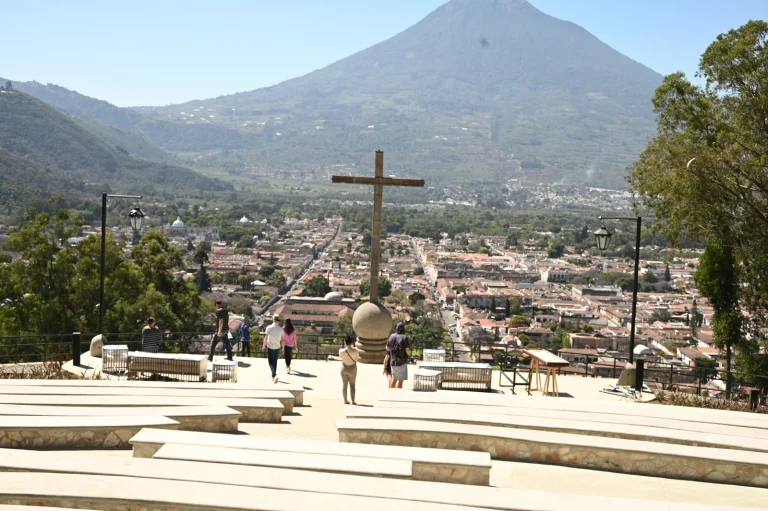
Planning a considered Antigua stay
Choose a useful city base and keep nearby communities, viewpoints and regional journeys distinct.
Read the guide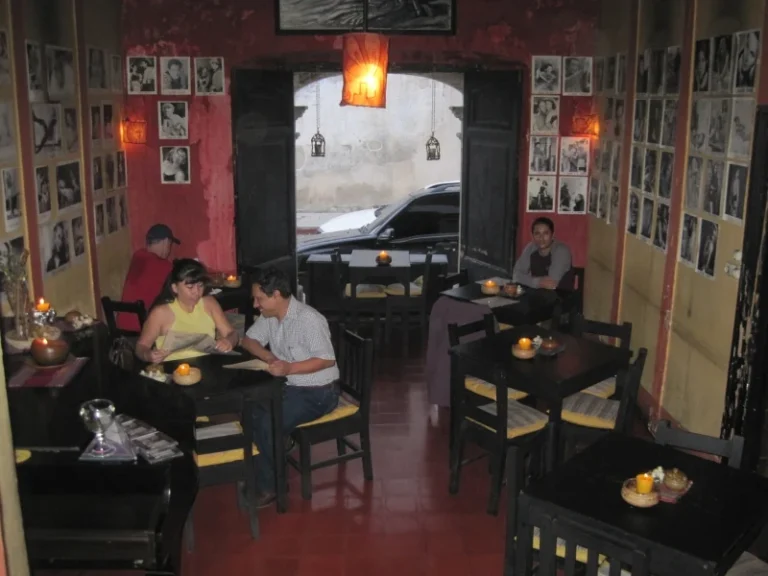
Coffee & making
Coffee, making and provenance
Follow a named producer’s account and ask specific questions about where an object or ingredient began.
Read the guide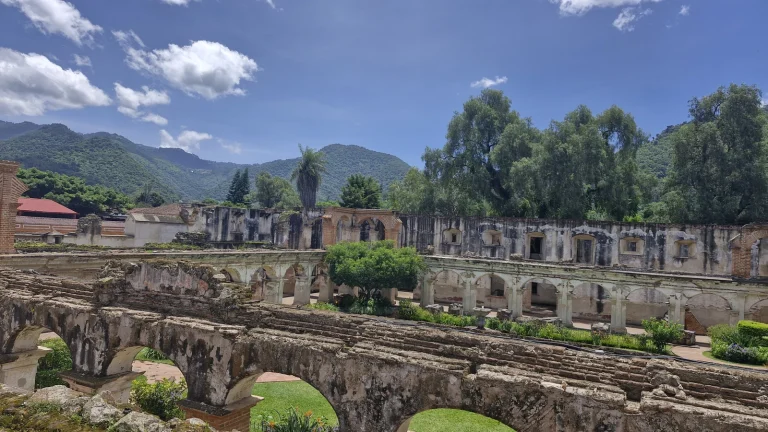
Heritage
Santa Clara and the layers of heritage
A considered reading of open walls, earthquake history and the work of preserving a living city.
Read the guide